


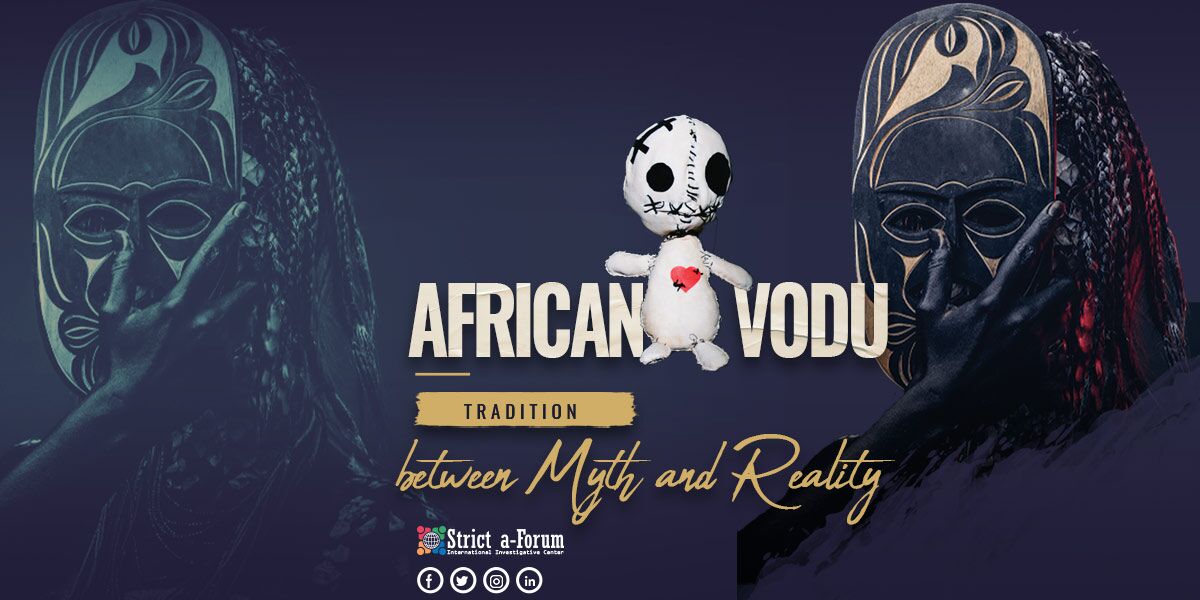
Some thinks of Vodu tradition as a horrific source of black magic, others think of it as a manifestation of ignorance, paganism and backwardness. Though, it is interesting to scrutinize the philosophical ground of such ancient African tradition.
History:
Similar to most oral African tradition, it is very hard to trace the source of Vodu religion. It is incorrectly believed that it is a Haitian tradition. However, the Vodu tradition reached the American continent in 1492, when king Charles V of Spain, enslaved and imported a huge number of Africans to Haiti aiming at exploiting them in hard labor.
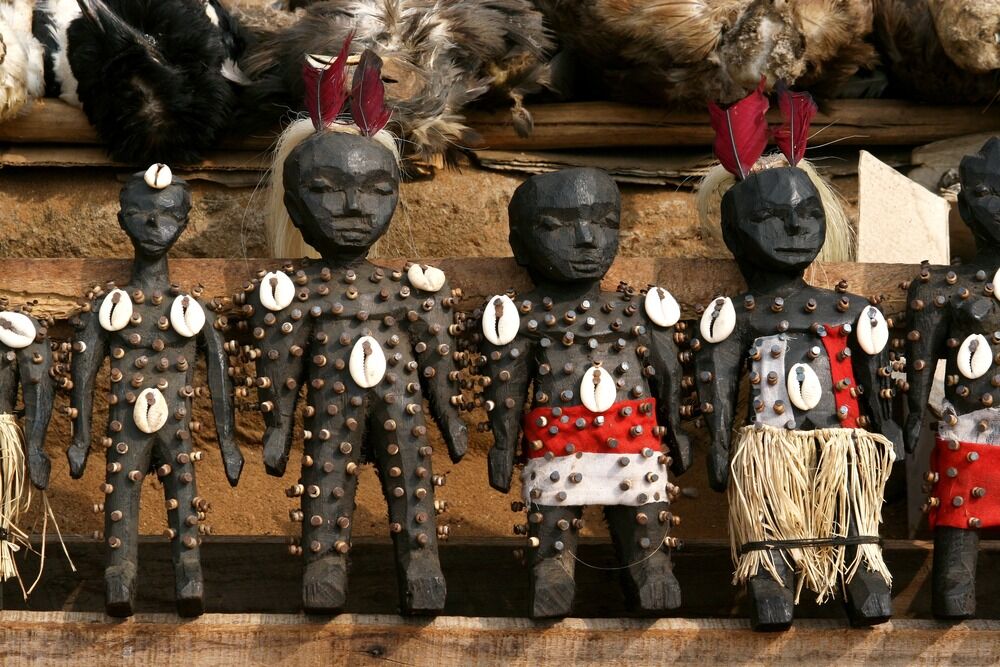 There are several stories around the foundation of this tradition. The most prominent one is a myth that resembles the Jewish exodus from Egypt, the legend utters: 15 thousand years B.C. a group of people, who will be known later as “Yoruba”, were enslaved in Egypt, nevertheless they revolted against this exploitation and preformed an exodus from Egypt into Africa, baring in their hearts and minds all the divine secrets.
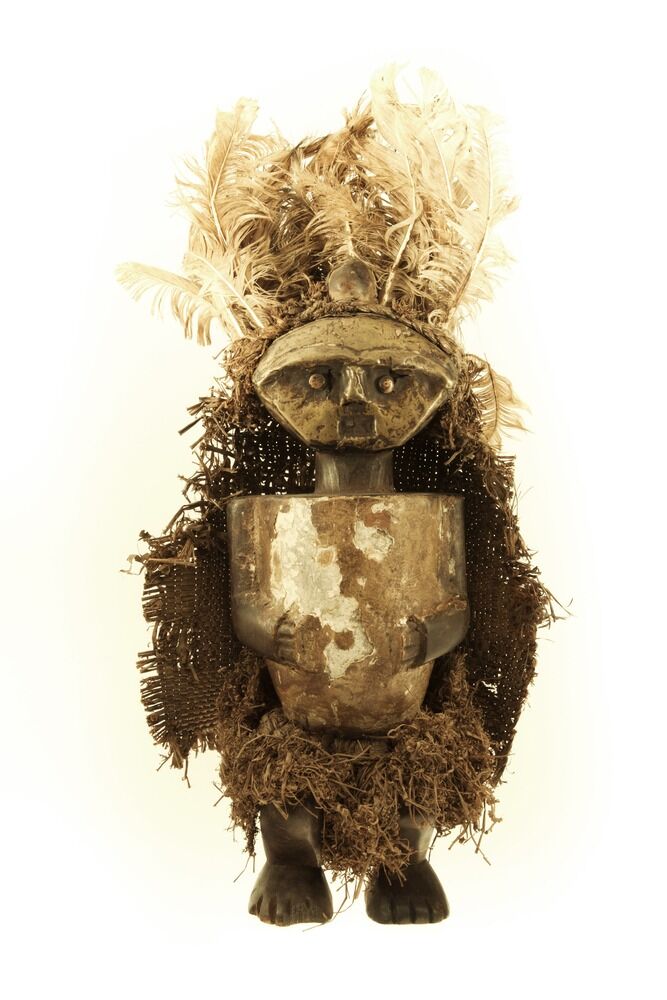 Commencing this series, we have mentioned that African mythology is one of the most ancient ones and the Egyptian tradition is the ultimate ancient source of it.[1] The exodus story of both Jews and Africans proves this. The latter is the older, however, the first is more documented because it was written down, while the African story remained running throughout history from tongue to tongue until it was documented very recently.[2]
Racism, colonialism, masculine domination and many other factors hindered a full notion of the Vodu history and philosophy until the diaspora.[3]
Beliefs and philosophy:
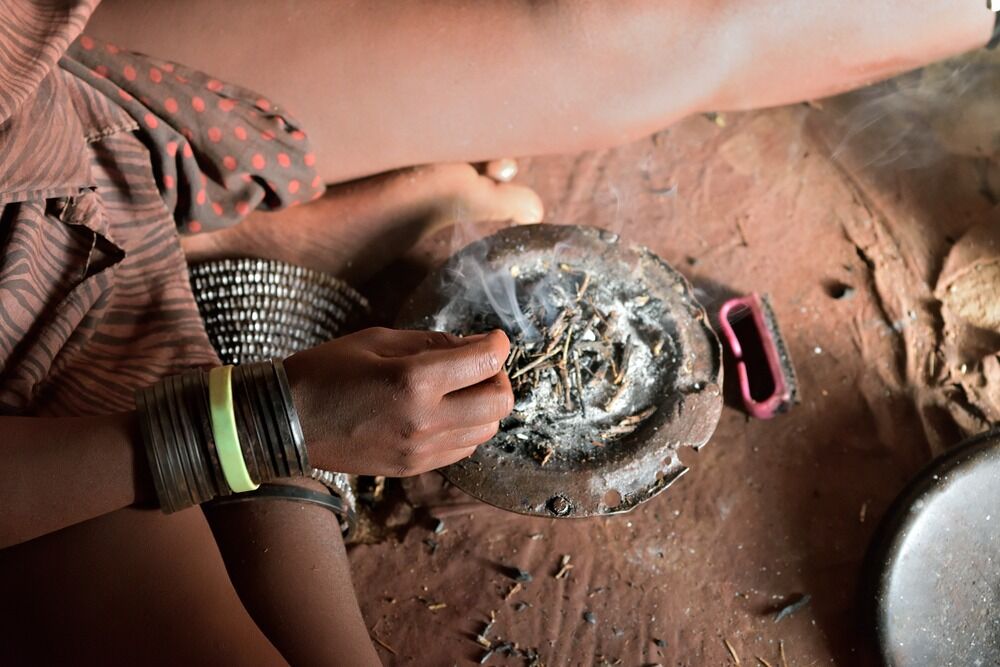 The word “Vodun/ Vodu/ Voodoo” stands for “spirit” in some local African languages. It is the key basis of convictions with parallel appellations initiated among the African diaspora in the American continent: Haitian Vodou; Louisiana Voodoo; Cuban Vodú; Dominican Vudú, and Brazilian Vodum.
The cosmology of Vodu is engendered from a female deity called “Mawu”, she is a symbol of motherhood, clemency, placidness, fertility and she is embodied by the Moon. A symbol that equals “Isis” in the Egyptian mythology.[4] While “Lisa”, a male figure, that forms the representation of power, strength and energy, he is depicted by the image of Sun. Both Mawu and Lisa are the children of the ‘Creator’, they were married and Mawu gave birth to a group of deities.
Papa Legba, son of Mawu and Lisa, is the guard of the divine gate, he is the entrance to all deities. He bears a resemblance to the ancient Egyptian god Min, as both depicted with large phallus.[5]
Another similitude with the Egyptian mythology; Dan son of Mawu and Hapi son of Horus, both carry androgynous features.[6]
The Egyptian influence on the Vodu tradition did not stop at the depiction of divinities. Actually, the Vodu tradition secured the feminist aspect of the ancient Egyptian tradition which faded in Egypt itself throughout history and as an outcome of cultural marriage with Greek and Roman traditions.
In Vodu tradition, the spiritual guidance is led by females of the family, tribe, or people. The Supreme Queen mother or priestess is chosen by the oracle to lead the abbey. Like priests, queen mother accepts a vocation from a revelation, it also can be merited from mother to daughter. Once she gets the call, she joins the convent to follow divine education. A hierarchy is established among the covenant elected by oracles, establishing an order of succession between priests and priestesses. A family convent does not welcome strangers.
The Vodu tradition is scattered all over the world: in Benin, Nigeria, Togo and the Americas and other places.
European imperialism, followed by some of the authoritarian governments in West Africa, have worked to defeat Vodun. Though, these efforts led to nothing since the Vodou their priesthood are central to upholding the tradition.
[1] https://iic-berlin.de/first-steps-to-discover-the-world-african-mythology/?fbclid=IwAR2V5ffmtEybd4f9k9nWdI8W7lEC9UCCFIzMIH0sDxyQMkAbOITARrhArsc
[2] https://www.white-magic-help.net/About_White_Magic/Voodoo_History_Basic_Principles_Background.html#:~:text=The%20history%20of%20voodoo%20does%20not%20start%2C%20as,They%20were%20slaves%20to%20the%20Pharaohs%20and%20Kings.
[3] https://www.amazon.com/Vodou-Power-Performance-Haiti-Diaspora/dp/0520228235
[4] https://www.britannica.com/topic/Isis-Egyptian-goddess


