


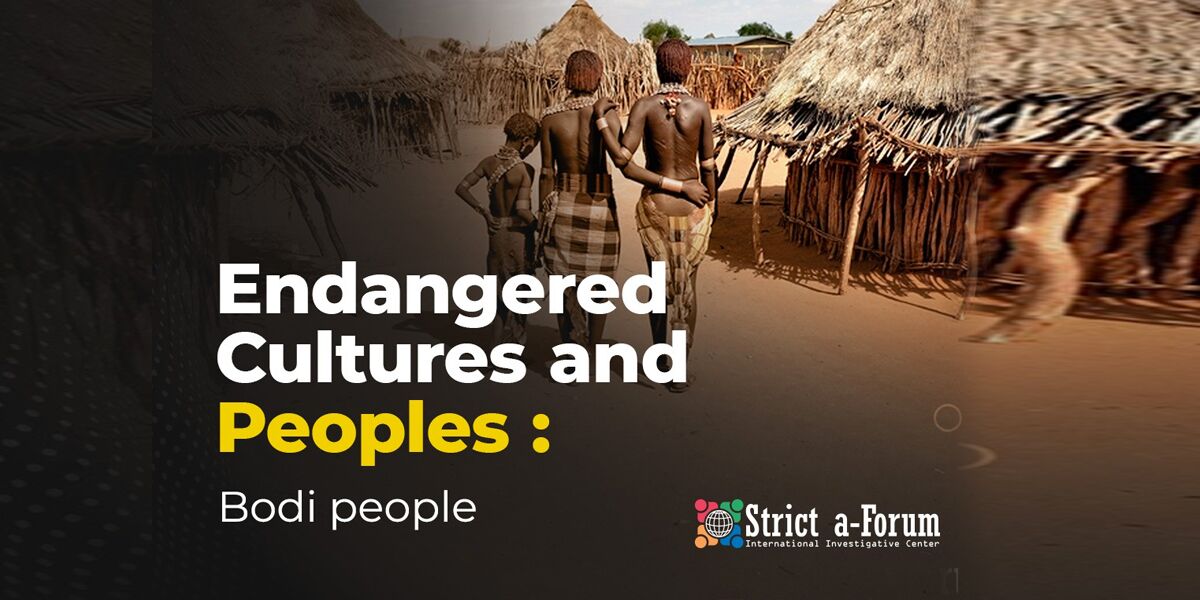
The Bodi tribe
is one of the many tribes that can be found in various African countries, notably Ethiopia[1]. These tribes have their own unique cultural practices that make them stand out from other tribes.
Although some of the practices observed in it may seem extreme, yet, tradition is a tradition and we have to respect it unless it causes unnecessary harm to people in general. Focusing on a tribe called „Bodi“, it is an Ethiopian tribe that can be found in the southern part of the country.[2]
Location and population
The tribe has a small population of 9,000, and resides near the Omo River, occupying about 1,900 square kilometers.
They are bordered by the Mursi tribe. Both tribes are similar in many cultural patterns, and they clash from time to time. The Bodi tribe are a group of people who depend largely on their livestock. They are also primary farmers involved in the cultivation of sorghum, maize and coffee along the banks of the Omo River.[3]
Festivals
Of all the traditional festivities, none is more special than the „kael“ which means „the holiday of fat men“. In the traditional calendar, the year begins in June. And in the celebration of the New Year, the traditions of Kael are celebrated. The organizers of the ceremony measure the body fat of the male contestant and reward the winner with no more than fame and adulation from the people.
This is what prompts the youth of the tribe who will participate in these rituals, to start their preparations about three to six months before the date of the competition.[4]
Traditions
During the grooming period, the contestants would follow a high-calorie diet to start gaining weight, and one of the ways to gain those kilograms is to make a mixture of blood and milk from a cow (an animal they talk to, treat it more like a human, and even sing to it) and drink milk and blood in large quantities.
Each family in the tribe appoints a participant, and they must spend the preparation period confined to their hut, unable to leave, as they enter a period of abstinence from sexual intercourse.
On the day of the coronation of the fattest man in the tribe, a big party is held in the village where the participants dance in a way that shows how big their stomachs are. In addition to being crowned king of the tribe. As a reward the winner gets married to the most beautiful young woman in the tribe.
However, the celebration has changed in recent years, as doctors discovered an increase in health problems, such as high cholesterol levels or cardiovascular diseases, which made them try to change the culture of the tribe by making them aware of the health risks they expose themselves to.
Beliefs
On the day of the Kael party, the men contesting leave their huts, with their bodies covered in mud and ashes, they display their physical abilities before the community elders who serve as judges.
Bodi men usually spend hours in the sun, running around a sacred tree.
The sacrificial cow is first killed with a sacred stone and then slaughtered. It is their traditional belief that killing the cow in this way helps preserve the „nourishing“ blood that is saved for the ceremony. Where they drink this blood.
After the sacrificial blood is shed, the elders of the tribe come forward to learn New Year’s prophecies through this blood. After it’s done, it signals the end of the ceremony where the winner of the competition is chosen and rewarded with the title of „Fat Man of the Year“.
On this day, too, women dress up to look their most beautiful, in order to choose the right husband, and the fat man is usually the most attractive among the women of the tribe.
Blood is a major requirement in most Bodi traditions. It is basically one of the main diets. Combined with milk, sorghum or corn porridge. The meat is eaten during holidays and festivals like Kael.
Endangered
The tribe is under threat of extinction for several reasons, the first of which is their harmful food habits, which are part of the traditions and heritage of their people, and the second is that the Ethiopian state is now razing their homes to exploit the space they occupy to house a larger number of citizens.
[1] https://www.britannica.com/place/Ethiopia
[2] https://answersafrica.com/bodi-tribe-kael-blood-milk.html
[3] https://www.survivalinternational.org/tribes/omovalley
[4] https://ibiene.com/culture/the-surprising-culture-of-the-ethiopian-bodi-tribe/#:~:text=The%20Bodi%20people%2C%20live%20in%20a%20remote%20corner,physiques%20and%20for%20a%20winner%20to%20be%20chosen.


