


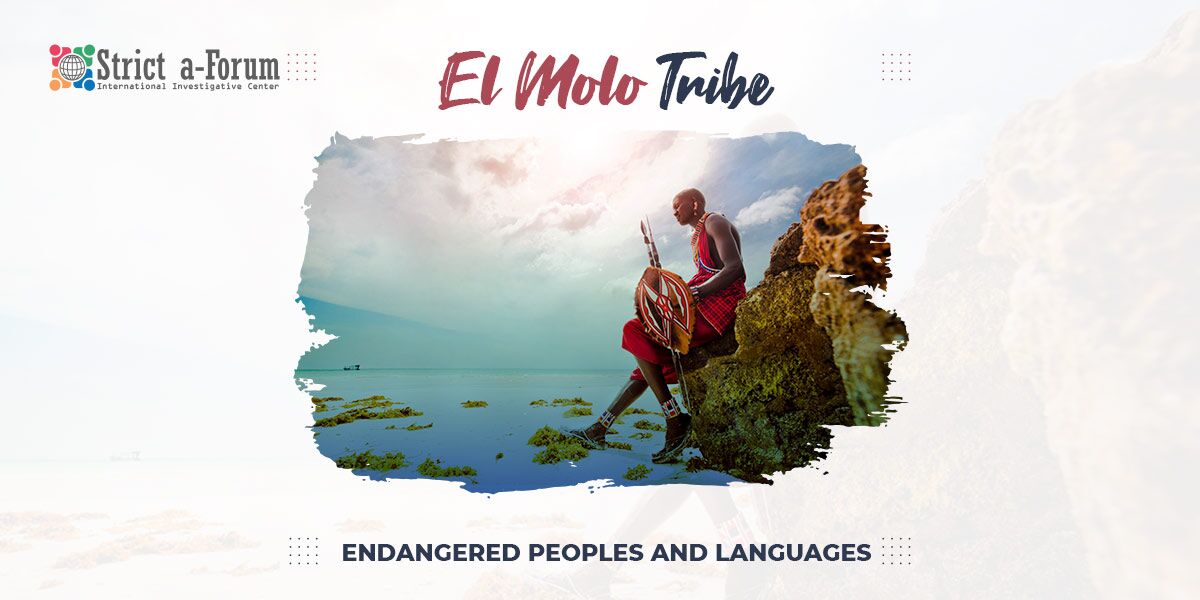
Owing to globalization, the destruction of traditional environments, and conflicts along ethnic and religious lines, many ethnic minorities today are heading towards complete extinction. Their wisdom, ancestors and languages are quickly disappearing. Language is the core of every traditional culture in the world, yet most indigenous languages are under threat. According to official forecasts from the United Nations, 50-95% of the world’s languages will disappear by the end of this century. Every two weeks and indigenous language dies.[1]
Our time is the era of rapid technological development. You rarely find a person who does not have a mobile phone, computer, smart watch, or anything related to electronics, so that we can say that no one can live without all these things, far from all this development. But there are people who dispensed with all these comforts and preferred to stay and live their lives in the same way as their ancestors, preserving their traditions, customs, dress and even language. But unfortunately, with all this development that invaded our homes, it has become difficult for these tribes to continue for a very long time, and they are now considered “endangered tribes.”
Why it is important to preserve and guard these cultures?
The ancient peoples and tribes, who possess languages, customs, ideas and beliefs dating back to ancient times, are considered a living human museum, as they help researchers and scientists in tracing the development of human language, hence tracing human history. These peoples, with their languages, customs, and even with their genetic characteristics, equate in their importance to the scientific discoveries that helped to reveal many of the mysteries about the history of human origin and evolution.[2]
Among these tribes, we are going to talk about “El Molo” tribe; one of the smallest and most endangered tribes worldwide.
El Molo, an ethnic group mainly inhabiting the northern Eastern Province of Kenya. They historically spoke the El Molo language as a mother tongue, an Afro-Asiatic language of the Cushitic branch, and now most El Molo speak Samburu.[3]
The El Molo tribe has a number of 300 people, and thus is the smallest tribe in Kenya, but the strange thing is that the people of this tribe do not live after the 45 years in most cases, because of difficult living conditions they face. The men and women of the tribe feed on the original crocodile, as they have for centuries lived on a diet consisting of the meat of two of Africa’s most dangerous beasts, the hippopotamus and the Nile crocodile.
Due to strict bans on hunting crocodiles and hippos, members of the tribe began to resort to fishing. However, this does not prevent some of them from trying to seize the opportunity and catch a crocodile or two. They are known for their bravery, but they are peaceful, because unlike many of the tribes around them, they do not raid their neighbors.[4]
Because of the arid environment that is not suitable for grazing, they rely only on hunting, and use the most primitive weapons to hunt prey. They resort to weapons made of palm trunks and spears to hunt fish and crocodiles; a method used for more than three thousand years.
The El Molo has been called „the bravest tribe in Africa“, because catching hippos with these primitive tools requires great courage. Hippopotamus hunters receives a large celebration, and every time a man hunts a hippopotamus, he is honored with a necklace that shows the number of hippos he has caught.[5]
Origins:
They are believed to have first journeyed into the Turkana Basin around 1000 BC from Ethiopia. It is more likely that they were peasants but due to the dry milieu, it is believed that they deserted agriculture in favor of lakeside fishing.[6]
Language:
For scientists, it is bad news to know that El Molo ancient language, which belongs to the Cushitic branch of the Afro-Asiatic family, is nearly extinct. They now speak the Nilo-Saharan language adopted by their neighbors.[7]
Religion:
“Waaq” is the name of their idol. He is the god of one of the pre-Abrahamic religions. Waaqa (the creator) is believed to be the father and creator of the universe and has many appearances known as Ayyaana. The Ayyaana serve as transitional spirits between Waaqa and his creations. The Ayyaana (spirits) are known to possess chosen men and women, who are then given the title Qallu (males) and Qallitti (females).All Uuma (creatures) are believed to be assigned an Ayyaana by Waaqa for guidance and protection. Waaqeffataas live according to Safuu, the moral and legal principles that guide the interactions of humans with Waaqa. The breach of Safuu is regarded a sin and is condemned by Waaqa.[8]
Genetics:
According to genetic analysis, El Molo’s origin associates with Afro-Asiatic lineage. They have common genetic characteristics with their neighbors and the Nilo-Saharan inhabitants. Some of them showed Eurasian characteristics.[9]
[1] http://encyclopedia.uia.org/en/problem/135023
[2] https://gradesfixer.com/free-essay-examples/should-we-try-to-preserve-endangered-cultures-and-their-languages/#:~:text=An%20endangered%20culture%20is%20practices%2C%20ideas%20and%20customs,cultures%20use%20are%20also%20dying%20out%20alongside%20them.
[3] https://www.kenyageographic.com/el-molo/
[4] https://www.kenyaplex.com/resources/10147-culture-of-el-molo-people-of-kenya.aspx
[5] https://kwekudee-tripdownmemorylane.blogspot.com/2013/07/el-molo-people-kenyas-smallest-and-near.html
[6] https://www.journeykenya.com/el-molo-people-kenya/
[7] https://lughayangu.com/post/the-el-molo
[8] https://waaqreligion.blogspot.com/2012/08/waaqism.html
[9] https://artsandculture.google.com/story/JwWhe7Y5wdpmKQ?hl=en


