


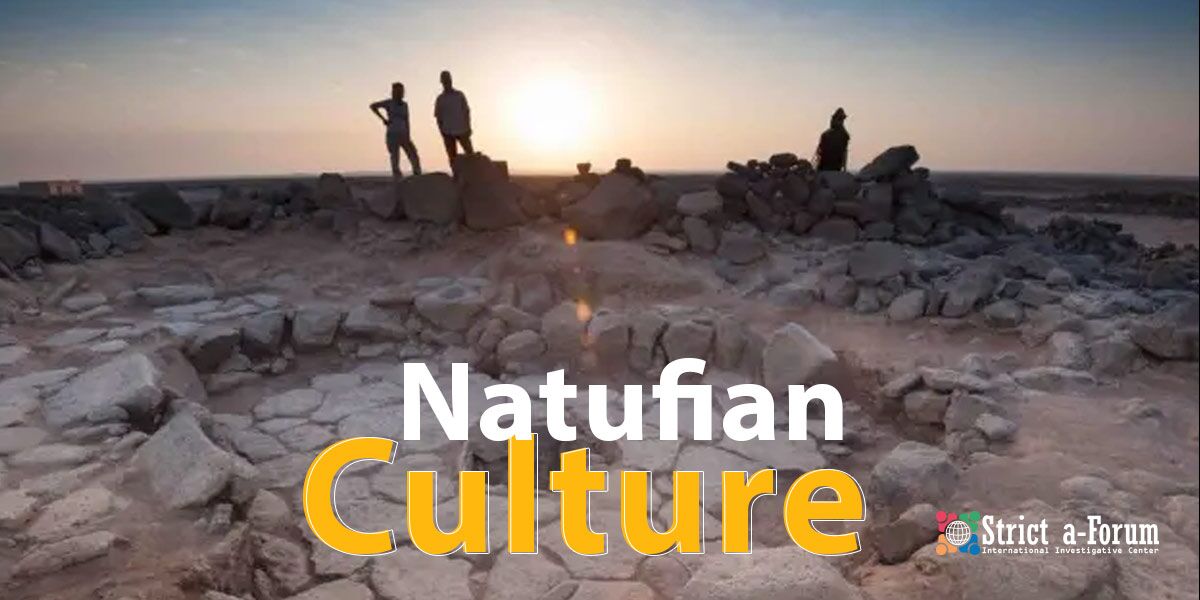
Fifteen thousand years ago, a sedentary population settled in the area of Levant[1]. They started agriculture at “Tel Abu Hureyra”[2] south Syria maybe 13 thousand years ago, but at al Shubayqa in Jordan[3], scientists found the most ancient evidence of baking bread 14 thousand years ago.
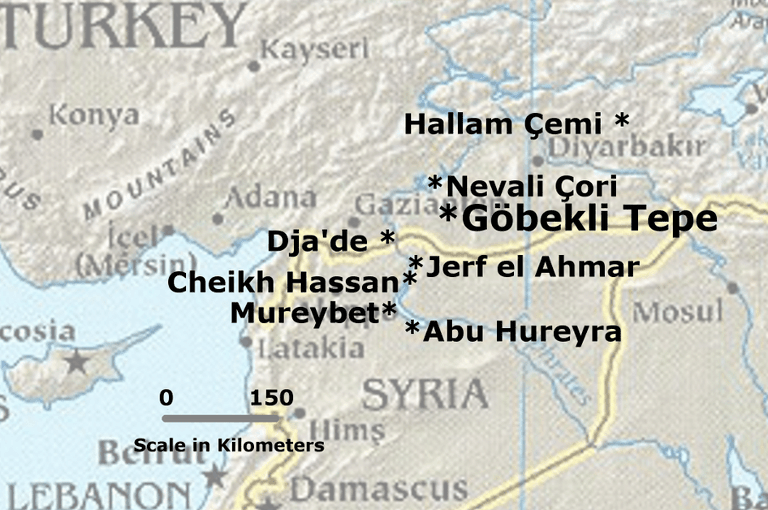
However, the Natufians depended mainly on wild cereals, fishing and hunting animals. The name “Natufian” was derived from “Wadi Al Natuf” in Shuqba, a Palestinian town near Ramallah, in which the Natufian culture was first discovered in Shuqba Cave.[4]
The Shuqba cave was discovered first in 1928 by the British anthropologist Dorothy Garrod. Her excavations were meant to be Biblical archaeology[5] in the British Palestine. Notwithstanding, Garrod, in her prospecting, was able to find some pre-historic tools. She continued her new project and later she discovered other materials, evidence and traces of the Natufian culture in “Al Wad” and the Mount Carmel[6]. Later on, the French anthropologist “Rene Neuville”[7] continued the work.
Discovered Materials:
Among materials discovered, a figurine known as “Ain Sakhri lovers”[8], microlith[9] blades and tools. They are all kept in the British Museum.[10]
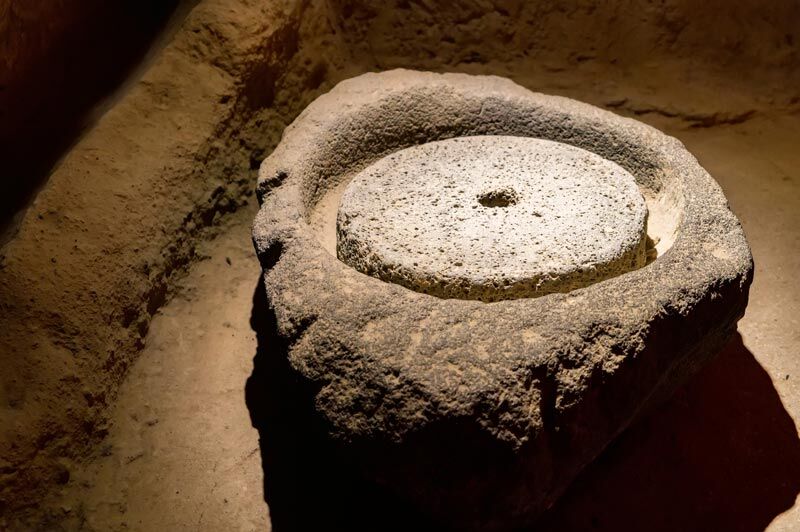 A grave of an important Natufian woman was discovered in 2008, in a mine in the Hilazon Tachtit cave[11] in northern Israel. The grave goes back to 12 thousand years ago. The burial contained the remains of at least three aurochs and 86 tortoises, all of which are thought to have been brought to the site during a funeral feast. The body was surrounded by tortoise shells, the pelvis of a leopard, forearm of a wild boar, wingtip of a golden eagle, and skull of a stone marten.
However, some agricultural traces were found, which make the population of this area the oldest peasants. This theory is supported by another discovery; the Natufians were the first to tame domestic dogs. At the Natufian site of Ain Mallaha in Palistine[12], the remnants of a human and a four-to-five-month-old puppy were found buried together.
Genetics:
It is expected that the DNA of the Natufian remains turns to be respectively: Egyptian, Jordanian, Palestinian, Israeli and Lebanese.
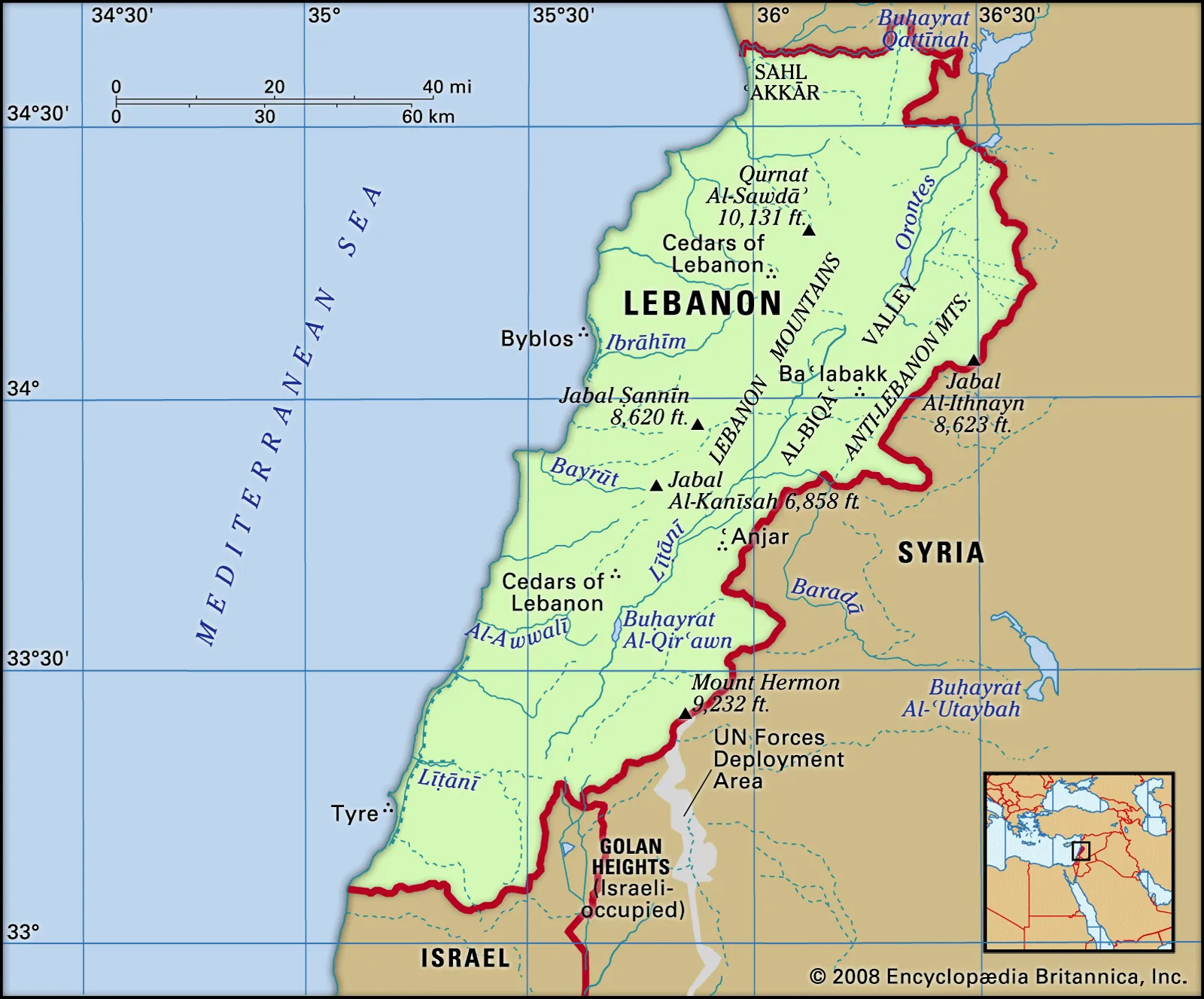
Regarding the Egyptian history,[13] this area has been invaded by Egyptians long time ago, hence, no wonder that the remains carry 40% of the Egyptian DNA. What is not expected that some European traces were found in the DNA test.
Language:
Though it is hard to trace the linguistic origins of the Natufian culture, as they did not write their language, nevertheless, it is believed, according to multiple evidence, that Natufians spoke Afroasiatic language.[14]
This area, as it is well known, is a struggle spot and a site on which the three Abrahamic religions[15] conflict. Such a situation may create a biased approach in interpreting the findings of excavations, though, the DNA tests proves that this is a place that tolerates with all humans.
[1] https://www.britannica.com/place/Levant
[2] https://www.thoughtco.com/abu-hureyra-syria-170017
[3] https://en.wikipedia.org/wiki/History_of_Jordan
[4] https://whc.unesco.org/en/tentativelists/5712/
[5] https://bible-history.com/archaeology/
[6] https://en.wikipedia.org/wiki/Mount_Carmel
[7] https://en.everybodywiki.com/Ren%C3%A9_Neuville
[8] https://joyofmuseums.com/museums/united-kingdom-museums/london-museums/british-museum/highlights-of-the-british-museum/ain-sakhri-lovers/
[9] https://www.dictionary.com/browse/microlithic
[10] https://www.tripadvisor.com/Attraction_Products-g186338-d187555-The_British_Museum-London_England.html
[11] https://www.researchgate.net/publication/316916050_Hilazon_Tachtit_Cave_a_Late_Natufian_Burial_Site_in_the_Western_Lower_Galilee_Israel
[12] https://www.metmuseum.org/toah/hd/eyna/hd_eyna.htm
[13] http://www.historicmapworks.com/Browse/antique.php?c=Europe&ctry=Egypt
[14] https://www.britannica.com/topic/Afro-Asiatic-languages
[15] https://www.worldatlas.com/articles/what-are-the-abrahamic-religions.html


